The blend
Four grasses
and a herb.
Grown for the leaf rather than the grain or the seed head, cut young, dried low and milled fine. That is the whole process.
01 — What is in it
Named, species by species.
Most pet greens products say “proprietary blend”. This one says what it is.
- 01
Nano tall fescue
Festuca arundinacea
A dwarf, fine-leaved tall fescue. Dense, soft blades that stay tender instead of turning coarse and stalky.
- 02
Kizzle tall fescue
Festuca arundinacea
A turf-type tall fescue with deep roots and strong summer growth — the backbone of the blend, so the leaf keeps coming.
- 03
Creeping red fescue
Festuca rubra
The finest blade in the blend. Needle-thin, shade-tolerant, and the one cats pick first out of a lawn.
- 04
Wildhorse Kentucky bluegrass
Poa pratensis
Narrow, soft blades. The classic lawn grass that most dogs are already grazing when they step outside.
- 05
Catmint
Nepeta cataria
The herb cats roll in — the same plant sold as catnip. Not there for nutrition: there to make the bowl worth approaching.
Why fine blades
Coarse, stalky grass is what a lawn turns into when it is left too long. Fine blades are what animals actually take: thin, soft, easy to tear. Three of the four grasses here are fine fescues, bred for a narrow leaf; the fourth is Kentucky bluegrass, the lawn species most dogs graze without being taught.
The blend also hedges the season. Tall fescue holds up in heat, creeping red fescue keeps going in shade and cool weather, bluegrass fills in between. Whichever is at its best, there is leaf in the pouch.
Why catmint
Palatability. A cat that will not approach the bowl is a cat that gets nothing, and grass powder is not a flavour cats seek out on its own. Catmint is Nepeta cataria — the plant sold as catnip — and it is the herb cats already roll in. It goes in at a low rate: enough for the smell to register, not enough to taste like a herb garden.
Why powder
A growing kit needs light, water, patience and a cat that leaves the pot alone. A pouch needs a spoon. Powder also lets us dry and mill the leaf at its best moment rather than whenever the pot happens to be ready.
02 — How it is made
Four steps, no chemistry.
i.
Grow
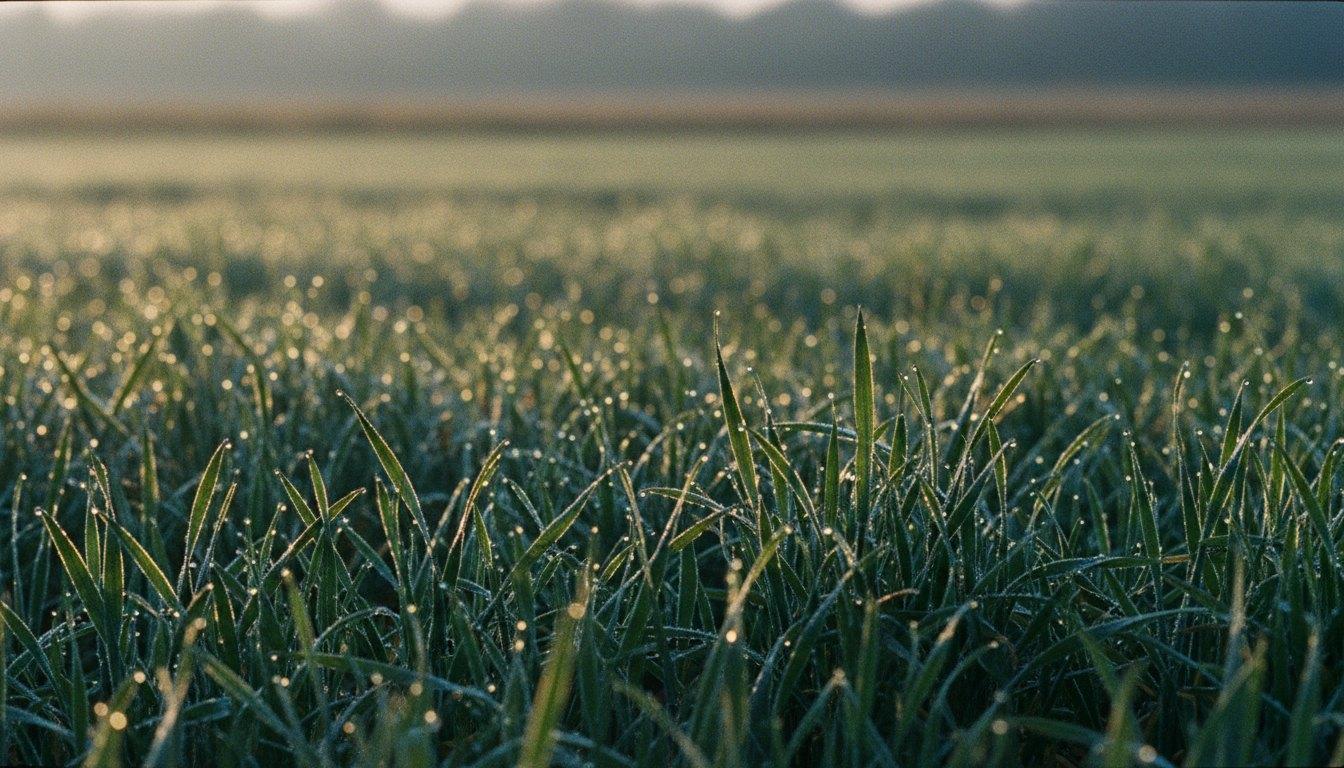
Stands of the four grasses are grown for leaf, not seed, and cut before the plant spends its energy on flowering.
ii.
Dry low
Air and low-heat drying. Hot drying is faster and cheaper and takes the colour and the smell with it.
iii.
Mill fine
Milled to a powder fine enough to disappear into wet food, then blended with the catmint at a fixed ratio.
iv.
Fill and test
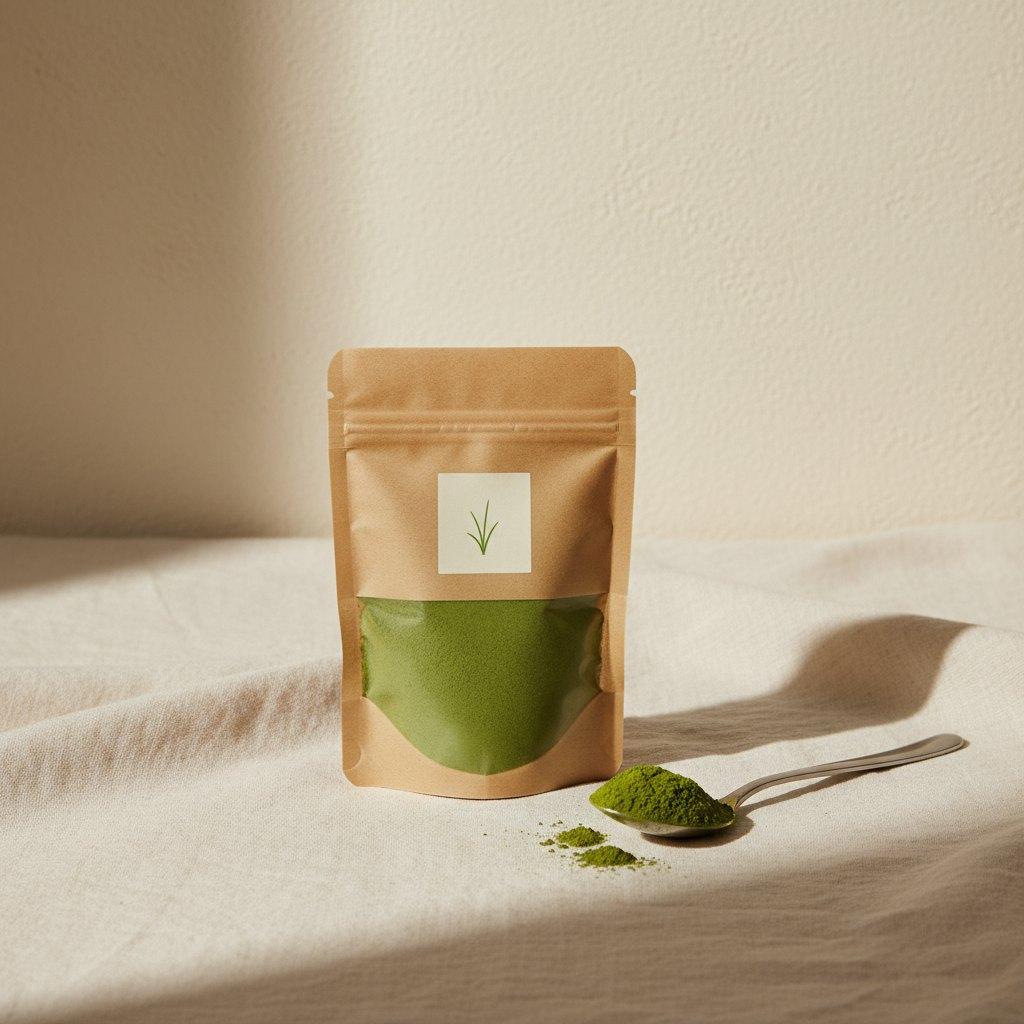
Filled into a 2 oz resealable kraft pouch, front sticker and ingredients sticker applied by hand. Every lot is cleared for heavy metals before it leaves.
Standards
What we will not put in the pouch.
No maltodextrin. No brewer’s yeast. No liver or bacon flavouring. No rice flour, no silica, no “natural flavour”. If it is not one of the five plants, it is not in the pouch.
03 — Honest status
What is decided, and what is not.
Decided: the species, the 2 oz pouch, the stickers, the fine mill, the no-additives rule.
In progress: organic certification and the heavy-metals panel per lot. We will publish the certificates before the first pouch ships, not after.
Not decided: the exact grams per weight band for cats and dogs. Those are with our veterinary advisor now. We would rather launch late than print a dose nobody signed.
Questions we cannot answer honestly should not be answered at all. If yours is missing, write to hello@pawgrass.co.